






US FDA advised cosmetic stakeholders it will not issue cosmetic facility‑registration compliance certificates to clarify its regulatory scope and avoid market misinterpretation.
US FDA advised cosmetic stakeholders it will not issue cosmetic facility‑registration compliance certificates to clarify its regulatory scope and avoid market misinterpretation.

U.S. FDA issued Final Administrative Order OTC000008‑1 to remove PABA and trolamine salicylate from the sunscreen active‑ingredient list by deeming them not GRASE.

CIRS Group has compiled and summarised the latest global cosmetic regulatory developments of July 2026.

As global regulatory landscapes evolve, staying ahead of compliance deadlines is critical for beauty and personal care brands. To help companies systematically track regulatory shifts and assess compliance risks in advance, CIRS Group has compiled a comprehensive timeline of upcoming global cosmetic regulations taking effect from August 2026 onward.

CIRS Group has categorized the cosmetic regulations that have already taken effect or been implemented in major global markets as of July 31, 2026 (inclusive), for your reference.
Illinois signed Chemicals in Cosmetic Products Act into law on July 10, 2026, banning cosmetics with 24 specified intentionally added ingredients starting July 1, 2028.

CIRS Group has compiled and summarized the latest global cosmetic regulatory developments of June 2026.
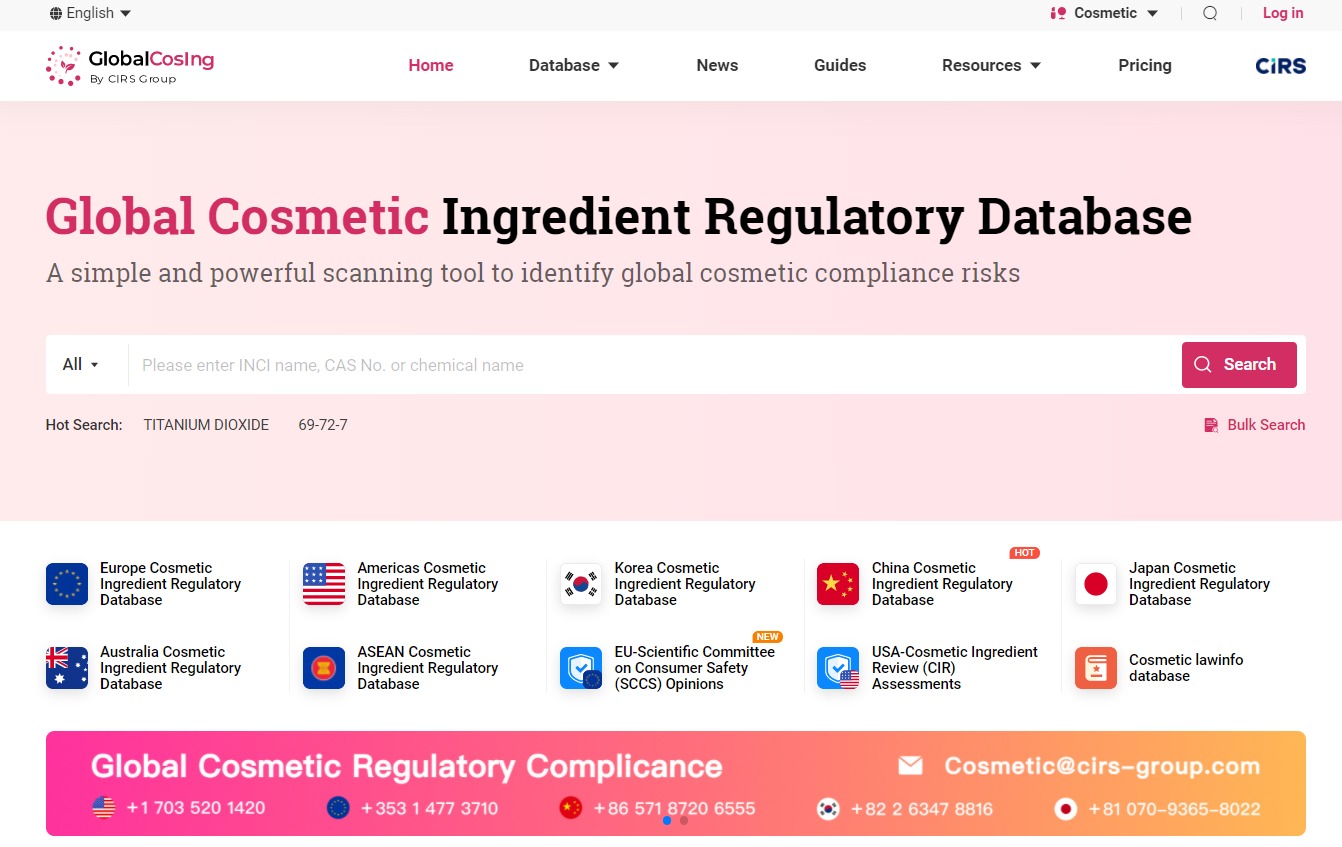
Global CosIng, a leading cosmetic ingredient regulatory data platform developed by CIRS Group, today announced the official launch of Global CosIng 2.0!

This article compiles and summarizes the latest developments in cosmetics regulations worldwide as of May 2026.
In a landmark move for the U.S. sunscreen industry, the FDA has approved Bemotrizinol (Bis-ethylhexyloxyphenol methoxyphenyl triazine) for inclusion in the over-the-counter (OTC) sunscreen monograph as a permitted active ingredient. Announced on June 9, 2026, this is the first new active ingredient added to the monograph in more than two decades, reflecting ongoing efforts to modernize the U.S. sunscreen regulatory system. The final order takes effect on August 9, 2026.