







South Korea MFDS and KIPO unveiled findings from their first special judicial‑police joint probe, detecting 33,281 units of 28 counterfeit cosmetic products sold online.
South Korea MFDS and KIPO unveiled findings from their first special judicial‑police joint probe, detecting 33,281 units of 28 counterfeit cosmetic products sold online.

South Korea MFDS issued revised applicant‑focused guidelines on test methods for prohibited cosmetic ingredients.

South Korea MFDS launched GCORAS as a milestone for global cosmetics safety and K-Beauty competitiveness through international regulatory cooperation.

South Korea’s National Assembly passed its first cosmetic‑industry‑specific act for full‑value‑chain support and amended the Cosmetics Act to strengthen safety oversight.

South Korea’s Ministry of Food and Drug Safety announced draft amendments introducing ISO-aligned in vitro test methods for determining sunscreen SPF and PA, reducing development time and costs compared to human testing. The rules also refine functional cosmetics data exemption criteria based on additives and clarify substantiation standards for UV protection labeling and advertising.

CIRS Group has compiled and summarised the latest global cosmetic regulatory developments of July 2026.

South Korea MFDS issued draft cosmetic braille labeling rules governing braille and accessibility QR codes on packaging to protect disabled consumers’ right to safe cosmetic use.

Korea MFDS issued Notice 2026-56 to revise cosmetics allergen labeling and usage warning rules.
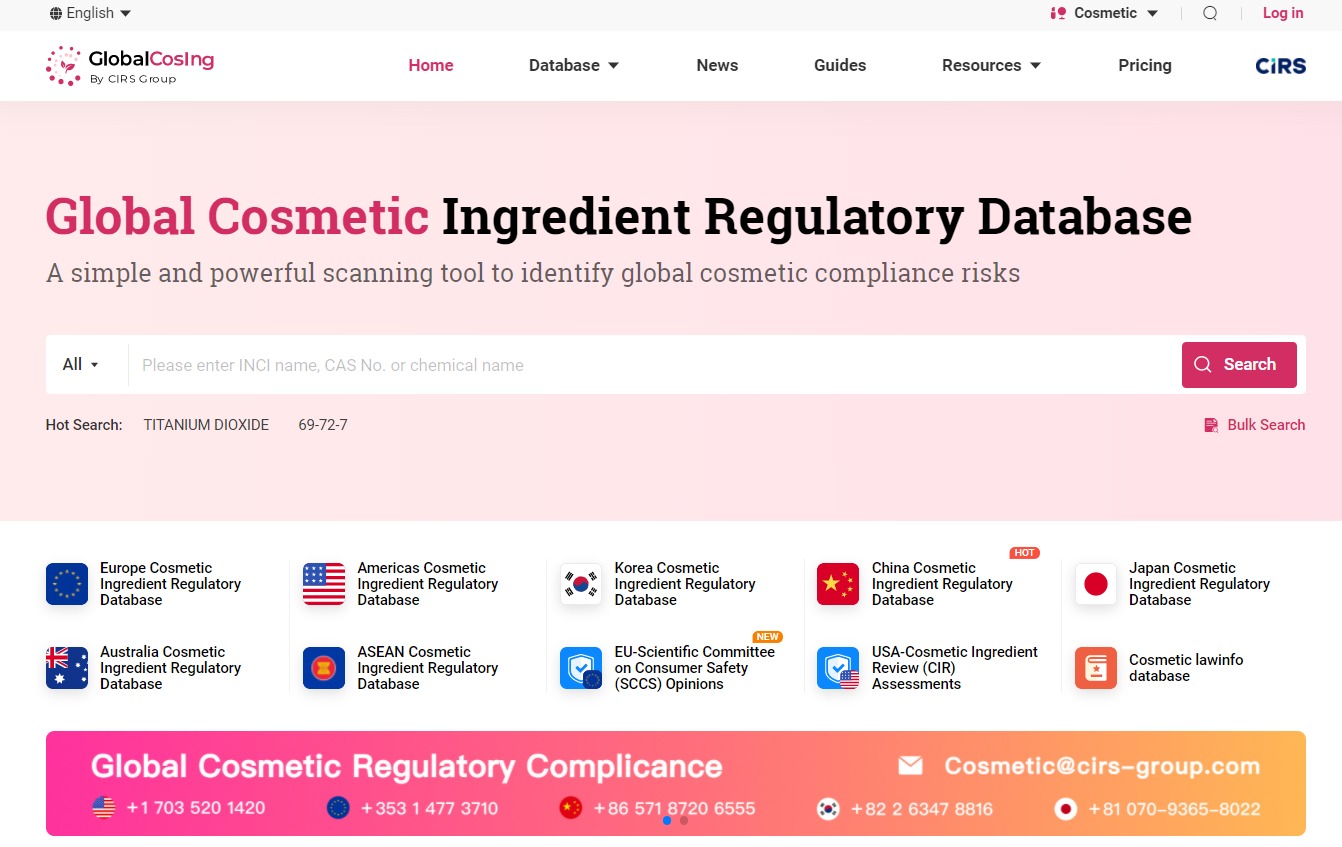
Global CosIng, a leading cosmetic ingredient regulatory data platform developed by CIRS Group, today announced the official launch of Global CosIng 2.0!

Based on the current laws and regulations of South Korea, CIRS Group provides a systematic analysis of the full compliance process for cosmetics exported to South Korea, covering seven key areas: definitions, classifications and market entry requirements, regulatory authorities, enterprise roles, compliance procedures, documentation requirements, and sample standard import declaration reports and inspection reports. This guide offers one-stop guidance to help products clear customs and enter the market in compliance.