









CIRS Group has summarized the latest global cosmetic regulatory developments of September 2026 to help enterprises gain a comprehensive view of global regulatory trends.
CIRS Group has summarized the latest global cosmetic regulatory developments of September 2026 to help enterprises gain a comprehensive view of global regulatory trends.

Vietnam notified WTO of Draft Decree on Cosmetics Management (G/TBT/N/VNM/453) drafted by its Drug Administration; comments are due November 1, 2026.

CIRS Group has compiled and summarized the latest global cosmetics regulatory developments in August 2026.

CIRS Group has compiled and summarised the latest global cosmetic regulatory developments of July 2026.

As global regulatory landscapes evolve, staying ahead of compliance deadlines is critical for beauty and personal care brands. To help companies systematically track regulatory shifts and assess compliance risks in advance, CIRS Group has compiled a comprehensive timeline of upcoming global cosmetic regulations taking effect from August 2026 onward.

CIRS Group has categorized the cosmetic regulations that have already taken effect or been implemented in major global markets as of July 31, 2026 (inclusive), for your reference.

CIRS Group has compiled and summarized the latest global cosmetic regulatory developments of June 2026.
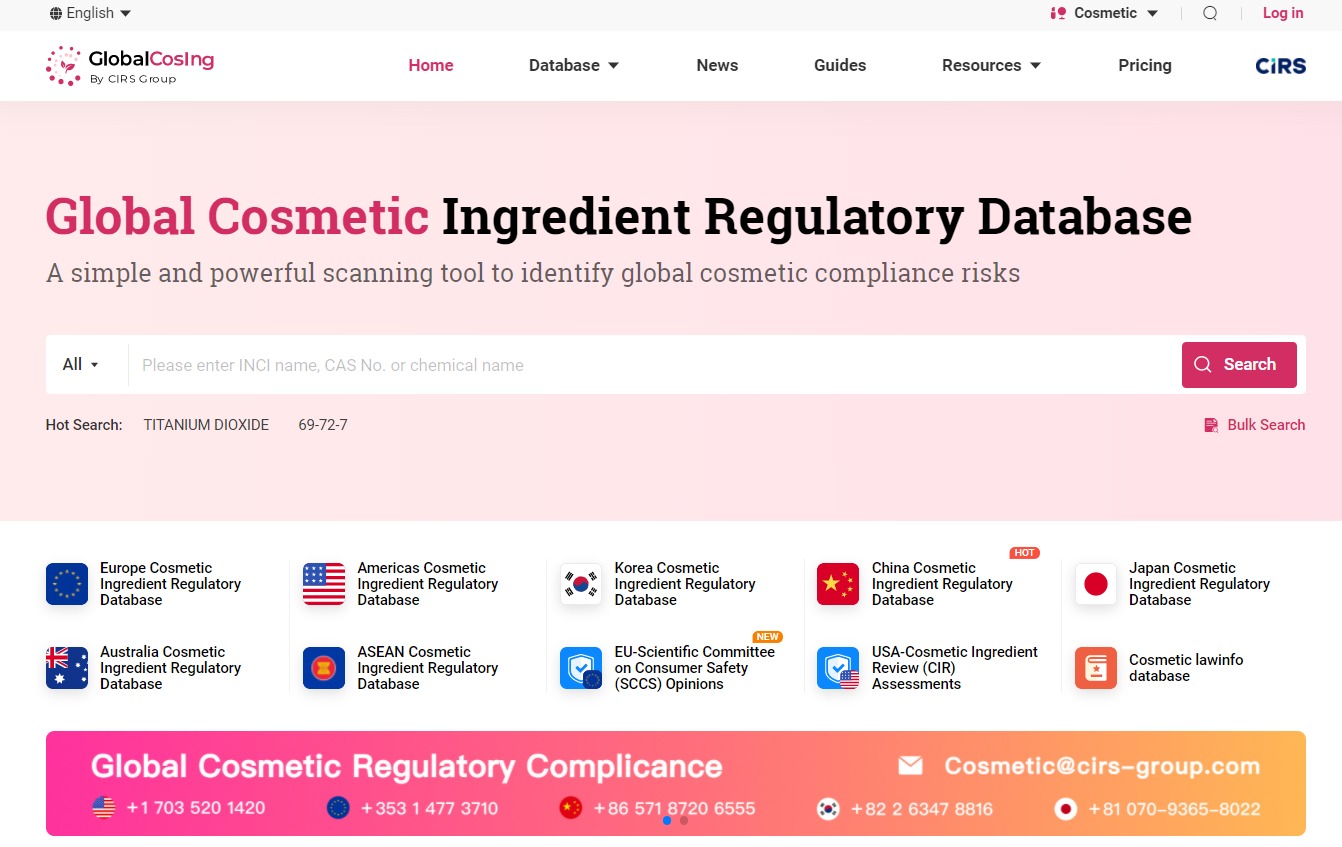
Global CosIng, a leading cosmetic ingredient regulatory data platform developed by CIRS Group, today announced the official launch of Global CosIng 2.0!

This article compiles and summarizes the latest developments in cosmetics regulations worldwide as of May 2026.

CIRS Group has compiled and summarized the latest global cosmetics regulatory developments in April 2026, covering industry news, new regulations, policy adjustments, and regulatory trends, helping companies stay compliant and fully informed of the evolving global cosmetics regulatory landscape.